Guides
Stone Veneer vs Tiles vs Stone Slab
By Stoneart · · 3 min read
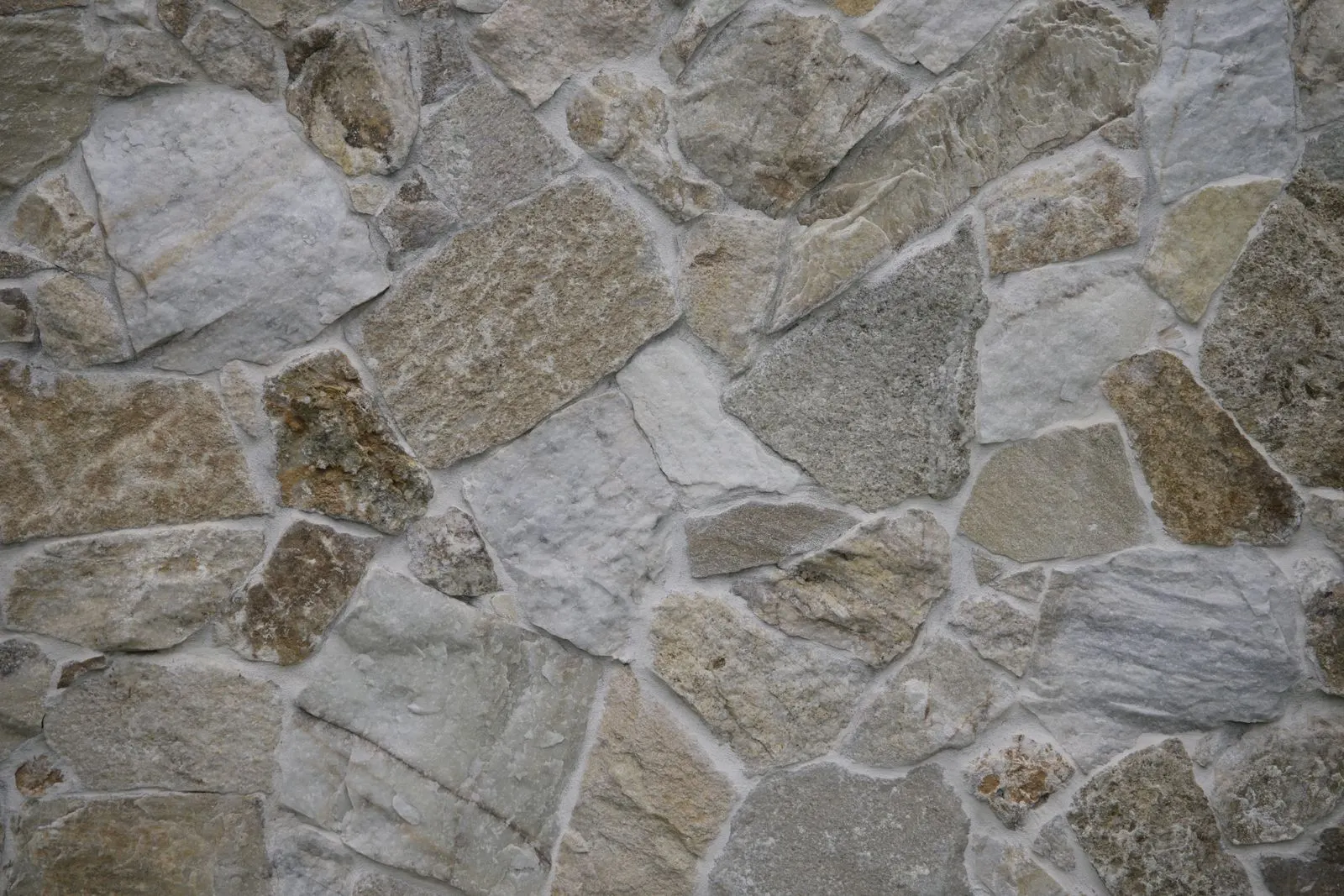
Flexible stone veneer, tiles and solid stone slab can all give a wall a stone look, but they behave very differently. In short, veneer wins on weight and curves, slab wins on thickness and traditional use, and tiles sit in between.
This comparison covers what actually changes on site: weight, bending, joints and installation.
At a glance
| Flexible stone veneer | Tiles | Solid stone slab | |
|---|---|---|---|
| Surface | Real stone | Ceramic or porcelain, often printed to look like stone | Real stone |
| Thickness | About 1 to 3 mm | Several millimetres or more | Typically 20 mm or more |
| Weight | Very light, about 1.5 to 2.5 kg per square metre | Heavier | Heaviest |
| Curved surfaces | Bends to gentle curves | Does not bend | Does not bend |
| Joints | Large sheets, few joints | Many joints, usually grouted | Joints between large pieces |
| Cutting | Utility knife or saw | Tile cutter or wet saw | Specialist stone cutting |
| Fixing | Suitable adhesive on a prepared surface | Tile adhesive and grout | Mechanical fixing or heavy-duty adhesive, with support |
These are general industry figures. Specific products differ, so confirm details with the supplier.
When flexible stone veneer is the better choice
- The surface is curved. Columns, rounded walls and arches are where veneer works and slab cannot.
- The structure cannot carry much weight. Partitions, lightweight walls and upper floors benefit from a very light material.
- You want real stone texture on furniture or doors. Thin, light sheets can go where heavy stone cannot.
- Speed matters. Large, light sheets that cut with simple tools can shorten installation on a feature wall.
- You are renovating. A thin layer adds almost no thickness to an existing wall.
When slab or tiles make more sense
- Heavy-use floors and worktops. Thick solid stone is made for load and wear, which a thin veneer is not.
- A fully traditional, solid look and feel. Some projects specify full-thickness stone for its depth and edges.
- Budget and simplicity for large flat areas. Tiles are widely available and familiar to every installer.
Looking at real stone vs stone-look
Veneer and slab show real stone, with its natural variation. Stone-look tiles repeat a printed pattern, which can look uniform across a large wall. If natural character matters, ask for samples of each and view them in the room's own light.
Questions people ask
Is stone veneer cheaper than slab?
Veneer can reduce the cost of structure, transport and installation, because it is light and easy to handle. Price still depends on the stone, the size and the supplier, so ask for a quote for your actual area.
Does veneer last as long as solid stone?
The stone itself is long-lasting. How long a veneer installation lasts depends on the backing, the adhesive, the surface it is fixed to and where it is used. Follow the supplier's guidance for wet or outdoor areas.
Can I use veneer instead of tiles in a bathroom?
Many people do, but wet areas need the right backing, adhesive and finishing. Ask your supplier to confirm what is suitable for the exact conditions before you specify.
Next steps
Read our plain-English guide to flexible stone veneer, browse the Natural Stone range, or contact Stoneart to talk through your project and request samples.